Bavaria’s Shining Star: Munich
The capital of Bavaria, Germany’s largest state, Munich offers an extremely rich cultural and architectural profile.
Although the city was heavily damaged in the Second World War, it has managed to preserve this richness. Today it remains one of the most important cities to visit in Europe.
With a population of about 1.5 million, Munich is Germany’s third-largest city. It’s also the birthplace of giant German brands known worldwide. Oktoberfest, the traditional beer festival that draws millions of people, is held here too.
Exploring Munich, with its museums, cathedrals, art galleries, historic sites, streets and avenues, is a real privilege. Come on, let’s look together at the best places to visit in Bavaria’s shining star.
Marienplatz
It’s no coincidence that we start with Marienplatz. This is where the city was founded in 1158. Although in its early days it was used as a place where criminals were punished, it has of course changed a lot and become a touristic spot full of cafés, brought to life by the historic buildings around it.
The Marian column with the statue of the Virgin Mary stands on Marienplatz. The Old and New Town Halls and St Peter’s Church are also here. The Neues Rathaus, or New Town Hall, with its neo-Gothic architecture, houses the famous Glockenspiel clock. Every day at certain times, shows are performed as it chimes. By coming to Marienplatz, one of the city’s liveliest places, you can visit many sights at once.
The English Garden (Englischer Garten)
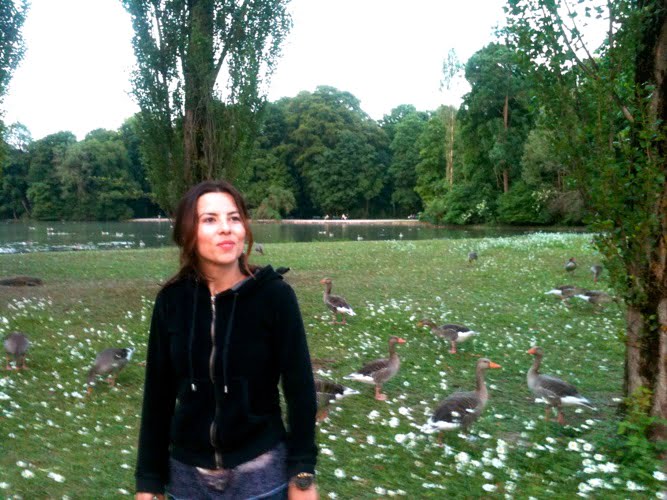
In Munich, on the banks of the River Isar, you’ll find the Englischer Garten, one of the largest urban parks in Europe.
Created in 1789, this magnificent park covers about 3.7 square kilometres. You can cycle, walk or simply use it as a place to relax. You can even get a surfboard and surf the standing wave at the Eisbach. In its beer gardens you can sip Germany’s famous beers, and you can also visit the Chinese Tower, a wooden pagoda that’s home to one of the city’s best-known beer gardens.
Deutsches Museum
One of the largest science and technology museums in the world is the Deutsches Museum, the German Museum. Founded in Munich in 1903 by the Association of German Engineers, it stands on an island in the River Isar. With tens of thousands of objects on display, you’d need far more than a day to see it all, so pick the sections you most want to see. The museum also has displays on papermaking and glassblowing.
Nymphenburg Palace, Munich
About 6 km from Munich’s Old Town, Nymphenburg Palace impresses visitors with its grand appearance. Begun in 1664 as a summer residence, it grew into a full palace with additions from the 18th century onwards.
The palace belonged to the Bavarian royal family until 1918, after which it passed to the state and opened to visitors. Featuring striking Baroque architecture, Nymphenburg Palace is counted among Europe’s largest royal palaces.
Munich Allianz Arena
When we think of Munich, many of us first think of Bayern Munich, one of the world’s most famous football clubs. While you’re here, don’t leave without visiting Bayern’s world-famous stadium, the Allianz Arena. This magnificent building, which attracts not only football fans but visitors from everywhere, is impressive with its architectural details. Its LED outer shell in particular gives the stadium a very special identity. Built at a cost of around 340 million euros, the Allianz Arena offers guided tours on certain days.
Viktualienmarkt
Another place you’ll love visiting in Germany is the Viktualienmarkt. If you enjoy street markets in Europe, this interesting place is just right for you. Very close to Marienplatz, the Viktualienmarkt is also very popular with food lovers.
At the Viktualienmarkt’s long-established stalls, you’ll find fresh cheese, mushrooms and all kinds of fruit and vegetables. One of Munich’s most beloved markets, it’s open six days a week. Be sure to add the Viktualienmarkt, enlivened by beer gardens and delicious food, to your Munich list.
