In this post you’ll find places to visit in Athens and its flavours: the Acropolis, Psyrri, Monastiraki Square, Lycabettus Hill, Anafiotika, the Erechtheion, the Temple of Athena Nike, the National Garden, the Temple of Olympian Zeus, Plaka and more.
Athens, Greece

The capital of Greece, Athens has a metropolitan population of nearly 4 million and some of the oldest remains of antiquity. With a history of over 3,000 years, it welcomes huge numbers of tourists every year. It takes its name from the city’s protector goddess, Athena. According to mythology, Athena struck the ground with her spear and an olive tree sprang up. The olive, with its many qualities, brought abundance to Athens, so the Athenians chose Athena as their protector. As is well known, the olive branch represents peace today.
Athens is well worth seeing for its culture, mythology and role in history. You can also find traces of the Ottoman Empire that once ruled here.

Athens is especially rich in museums, and luckily there are combined tickets and city passes that can save you money and time. You can see Athens in 2-3 days, or stay longer if you like.
Now for what Athens means to me… Athens has a very special meaning in my life. At university I was on the school gymnastics team. In those years we took part in inter-university competitions. Our school had to go to a dance festival in Greece to represent Turkey. That’s when the door abroad opened in my life. With my athlete friends from university, we set off for the dance festival in Greece. We went by bus. Looking back now, it was a long, tiring journey, but it didn’t feel that way at all back then. We flew like birds with excitement and happiness. Greece wasn’t very different from the city we lived in. As someone born and raised in İzmir, being in Greece felt very much like home. The food, streets, buildings and people felt like ours, yet I was very happy to be going abroad for the first time.
Our dance competition and Greek hospitality

When we arrived in Athens, I was very excited for the competition; it was like a carnival. We had shiny, stretchy bodysuits. The other groups wore all kinds of costumes. Many Greeks came to watch and applaud us. The show went wonderfully, and there was an incredible atmosphere of friendship. Contrary to what I’d heard for years, the Greek people embraced us and loved us so much that we experienced real Greek-Turkish friendship. In those days a family invited us to their home.
This was a very different, new feeling for us. The whole team went to that Greek family’s home for dinner. That’s when I first felt Greek hospitality and warmth. How lucky I was to feel, through this family, that travelling abroad is something special. After I returned home, we wrote letters and sent each other gifts for many years. Then we lost touch. I grew up, got married, had children, moved city, and one day someone added me on Instagram.
After 20 years, that Greek family’s children had grown up and found me on Instagram. Can you imagine how I felt? We talked about the old days and promised to meet again in Greece. I wonder when this story, which we talked about on social media in 2022, will come true. When it does, you can be sure I’ll write about it here.
The streets of Greece were crowded, exciting and cheerful. The seafront looked just like İzmir’s Kordon. I can’t forget the frappé we drank by the sea on a warm summer evening. I’d never had iced coffee before, and it came with a big scoop of ice cream. If I go to Greece again, the first thing I’ll do is have a frappé.
We visited monuments and ruins that seemed straight out of the pages of history. It really was like a mythological journey. Every story I’d imagined in those days affected me even more.

Places to Visit in Athens
Syntagma Square
This square is practically the brain of the city. It’s right in front of the Parliament building and is an important centre. Here you’ll find hotels and shops, and you can catch buses and trams towards the coast. It’s among the places every visitor to Athens should stop by.
A must-see: the Acropolis of Athens
Visible from many parts of Athens, the name Acropolis comes from two words: “akro”, meaning high, and “polis”, meaning city. Here you’ll find many ancient remains, from the Parthenon to the Erechtheion. The Acropolis receives a great many visitors every year. Those planning to visit should know that climbing up in hot weather is quite challenging, so go early.
There’s an entry fee for the Acropolis.
Erechtheion
On the Acropolis, we start with the Erechtheion. It was dedicated to Athena and to the legendary king Erechtheus. Completed around 406 BC, it’s notable for its columns and its famous Caryatids. Over the centuries it has been used as a temple, a church and for various other purposes.
Temple of Athena Nike
Next on the Acropolis is the Temple of Athena Nike . Nike means “victory”, and the temple honours Athena as the goddess of victory.
Theatre of Dionysus
We continue exploring the Acropolis with the Theatre of Dionysus. It’s considered the first theatre in Athens, and some of the oldest drama festivals in history were held here. The theatre takes its name from Dionysus, the god of wine and the grape harvest.
Finally, the last place you’ll see on the slopes of the Acropolis is the Odeon of Herodes Atticus. Concerts are held here especially in summer.
Acropolis Museum
After visiting all these places, I recommend finally visiting the Acropolis Museum. Some of the remains taken from the temples and historic sites on the Acropolis are displayed here. The new museum building opened in 2009.
A peaceful garden…
National Garden
Once the garden of the royal palace, the National Garden is one of the city’s peaceful places to relax. It was created at the request of Queen Amalia. You’ll find many kinds of plants here, and you can walk around its ponds.
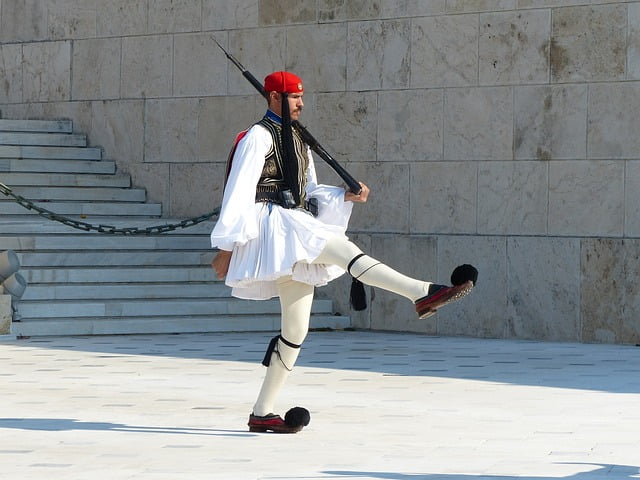
Right in front of it is the Greek Parliament . This neoclassical building was built between 1836 and 1843, originally as the royal palace. In front of the Parliament is the Tomb of the Unknown Soldier. Just like in London, the changing of the guard here is very impressive, and if you catch it, it’s worth watching.
After leaving the National Garden, you can walk to the Panathenaic Stadium.
Panathenaic Stadium
This stadium was built in antiquity for games held in honour of the goddess Athena and was later expanded. Rebuilt in marble, it can hold around 50,000 people. It also hosted the first modern Olympic Games in 1896. You can visit it for a small entry fee.
Monastiraki Square
This is perhaps one of Athens’s busiest squares. As you explore during the day, you’ll easily notice the crowds. What’s special about Monastiraki Square is its many cafés, restaurants and charming shops where you can buy souvenirs. The cafés on the square are also ideal for a break.
The historic places in this neighbourhood will also tell you about the city’s past.
Besides churches, there’s also a mosque on the square. It was built in 1759 by the Ottoman governor of the time, Mustafa Agha Tzistarakis. Today it hosts exhibitions of folk art.
Anafiotika, with its charming streets
On the slopes of the Acropolis, this area greets you with its local, authentic look. When we think of Greek architecture, many of us picture white and blue houses. In this neighbourhood you can see such houses and take lovely photos. According to the story, workers from the Greek islands, especially Anafi, were brought to Athens to build the king’s palace. They built this neighbourhood to live in while they worked. Of course, they missed home so much that they made their houses look like those on their island. It’s a real joy to see these island-style houses in the heart of Athens.

Visit the Plaka district of Athens.
With its narrow streets, bougainvillea and wonderful old houses, it’s one of the places you must include in your trip. One thing that makes exploring easier is that much of it is pedestrianized. I think you’ll love Plaka, with its many cafés and restaurants. It’s also famous for its tavernas.
While getting lost in these streets, don’t forget to buy souvenirs for yourself and your loved ones.

Lycabettus Hill
This is a hill where you can enjoy watching Athens from about 277 metres up. “ Its name is often said to mean “hill of wolves”. On the summit there’s the Chapel of St George, and there’s also an open-air theatre on the hill. Luckily you don’t have to tire yourself out getting up, because there’s a funicular that runs every day. Especially in the evening, when the lights come on, both the historic monuments and the buildings look enchanting from this hill.

Psyrri, Athens
In this area, smaller than the other squares, restaurants are also cheaper. You can wander its lovely streets and sit at a taverna for dinner. Psyrri is also rich in nightclubs and bars. You can find budget hotels here too. Travellers can stay here and reach many sights on foot.

Meteora Monasteries
Meteora means “suspended in the air”. It gets its name from the monasteries’ position on high rocks. It’s about 4-5 hours from Athens. The good news is that you can get there by train or bus, so you don’t have to rent a car.
A temple with tall columns in Athens
Temple of Olympian Zeus
Begun in the 6th century BC and completed centuries later under the Roman emperor Hadrian, this temple is another historic site you should see in Athens. It was built for Zeus and once had 104 columns. These columns are very tall. Plundered and damaged over history, only some of them stand today.

Ancient Agora of Athens
A very large and grand site, the Ancient Agora of Athens offers visitors a real journey through history. I recommend visiting this agora, with its many historic remains.
What to Eat and Drink in Athens? What Are Athens’s Flavours?
The Mediterranean food that dominates Greece continues in Athens too. Many Athenian dishes are also similar to those in Turkey. Visitors won’t feel too much of a stranger when it comes to food. Now let’s look at the dishes you shouldn’t leave Athens without eating.
A refreshing salad…
Greek Salad
Familiar to many of us, this salad is made with tomatoes, cucumber, red onion, olives and, of course, feta cheese. Indispensable olive oil goes on top. It’s a very refreshing, light salad.

Flavours similar to our own
Moussaka
As you can tell from the name, I want to talk about the dish we call musakka. The difference between Greek moussaka and ours is the béchamel sauce on top and the potatoes inside. Greek moussaka appears in many places around the world.
Tzatziki
Tzatziki is a thick version of our cacık. Made with strained yoghurt and cucumber, it’s served drizzled with olive oil.
Gyros
Seen all over Athens, this dish is actually a kind of wrap. We can say it’s a different version of our döner wraps.
Taste lokma in Athens too.
Loukoumades
Yes, by loukoumades I mean the lokma we often see in Turkey, often sold on the streets or given out for free. You’ll see these often on the streets of Athens too.
Saganaki
Saganaki is a kind of meze made with cheese. Sometimes various ingredients are added, and sometimes it’s simply cheese fried until crispy outside.
Spanakopita
A kind of spinach pie with a delicious taste. It’s made with spinach and Greece’s famous white cheese.
Briam
Here’s a light but tasty dish! Briam is made with fresh vegetables, finished with onion, garlic and olive oil. A very light dish, it’s made with vegetables such as potato, courgette and aubergine.
Other flavours in Athens
Besides all these, be sure to try in Athens baklava, whose name is the same as ours; souvlaki, a mix of fast food and kebab; dolmades, made with vine or cabbage leaves like our sarma and dolma; and kolokythokeftedes , courgette fritters similar to our mücver.
We left Athens with lovely memories. The excitement of the dance show, those lovely families, the mythological statues, all as delicious as an iced coffee…
Now our road leads to Thessaloniki…

