“My child only eats in front of a phone: what should I do?” The answer lies in your own eating habits. A person’s unhealthy eating habits affect a child’s eating habits. Trying to feed a child with a phone in front of them is the wrong approach.
Ah, isn’t it ironic! Parents hand their children smartphones and tablets to get them to eat, and then type into the search engine of those same devices: “My child only eats with a phone: what should I do?” As if it weren’t the parents who put the phone in their hands. Yes, I know being a parent is a journey full of difficult decisions. Sometimes the simple act of eating can turn into a tough battle, and in that battle parents have to make lots of strategic decisions. Some may seem small, but they can affect your child’s whole future. A seemingly simple habit like eating in front of a phone can leave deep marks on their future life, especially on their eating habits.
My child only eats with a phone, especially using a tablet at mealtimes: what should I do?
A tablet can make mealtimes more fun for children. Eating slowly lets children feel full on a small amount, and this often becomes another strategy parents use because they want their children to eat more. But did you know this tactic can cause your child to disconnect from their body and lose the ability to recognize their natural hunger and fullness signals?
Did you know that using a tablet or phone at mealtimes can cause your child to disconnect from their body and lose the ability to recognize their natural hunger and fullness signals?
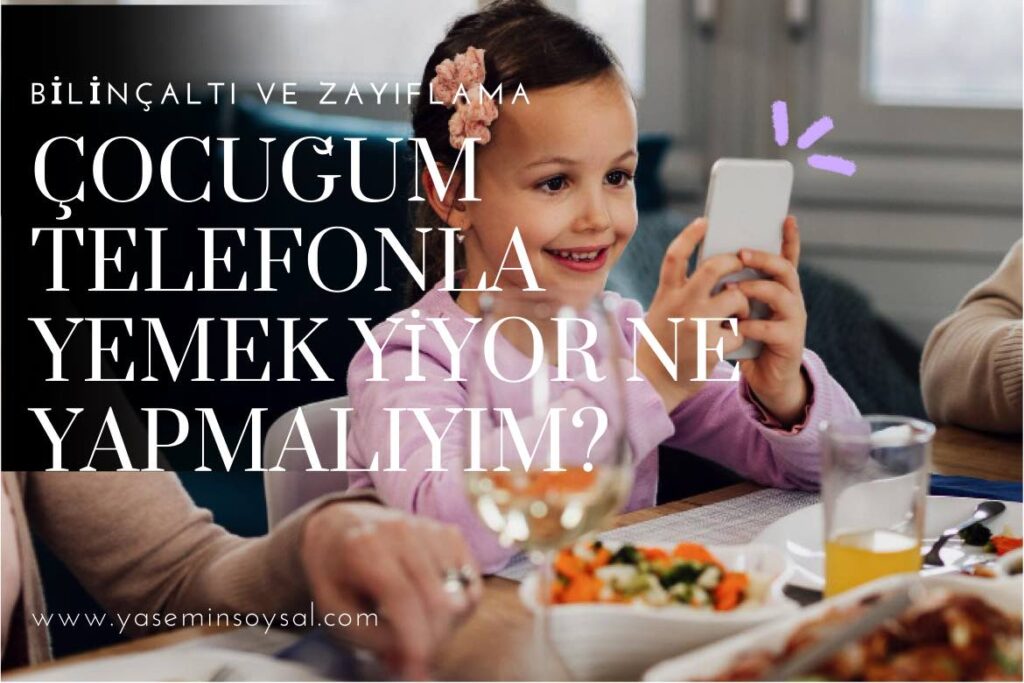
As parents, these technological helpers we sometimes use to get our children to eat actually weaken their body awareness and their ability to understand their natural hunger and fullness signals. Children miss the chance to really taste, smell and experience their food, and at the same time drift away from understanding when their body is full. This can make children prone to overeating and put them at risk of obesity. Now, reading these lines, you weren’t affected at all, were you? Because your child is far from obese, not even a little overweight. But you’re thinking about it the wrong way! This isn’t just about an extra kilo or two. What you don’t realize is that you’re cutting the communication between their brain and their body, and that this will stay with them as a very bad habit in the future.
My child only eats with a phone and won’t even open their mouth without a tablet. So what’s the solution?
Taking the tablet away from the child? Or just watching the child eat and telling them “when” and “how much” to eat?
Definitely neither. No, the solution is much simpler and more humane. The solution is to help children listen to their own bodies and trust their natural signals. This means teaching children how delicious food is, how good it smells and how it makes them feel. Most importantly, it means letting them decide for themselves when they are full and when they want more. Maybe they’ll say they’re hungry seven hours later, and you’ll have to wait.
Because of the harm already done, your child may say they’re hungry very late. In reaction, they may even be afraid to say they’re hungry. As the pressure you put on your child decreases, they’ll say they’re hungry much more freely. It’s like the feeling of a child who has always been dressed by their mother, hated it, and is free for the first time: even when cold, they won’t easily say they want to put something on, because they don’t trust you. When you calmly instil in them that they’re free and can put something on only when they’re cold, that’s when they’ll be able to say they’re cold with ease.
So if you think I’m going to say something like “At the next mealtime, try putting the tablet aside!”, you’re wrong.
What is that tablet doing on the table at mealtime? That’s the question I’ll ask you. “My child wants the tablet, what can I do?” What you need to face is that you want that tablet more than your child does. How? In fact, your child using a tablet makes things easier for you, not for them. It gets them fed faster, more and with less effort. So first of all I want you to notice that your child’s tablet use makes your life easier. You don’t have to feed them at exactly the right time or make them eat a lot to be a good mother.
Teach your child how delicious food is, how good it smells and how eating makes them feel. Most importantly, let them decide for themselves when they’re full and when they want more. This will help them not only now but in the future too.

