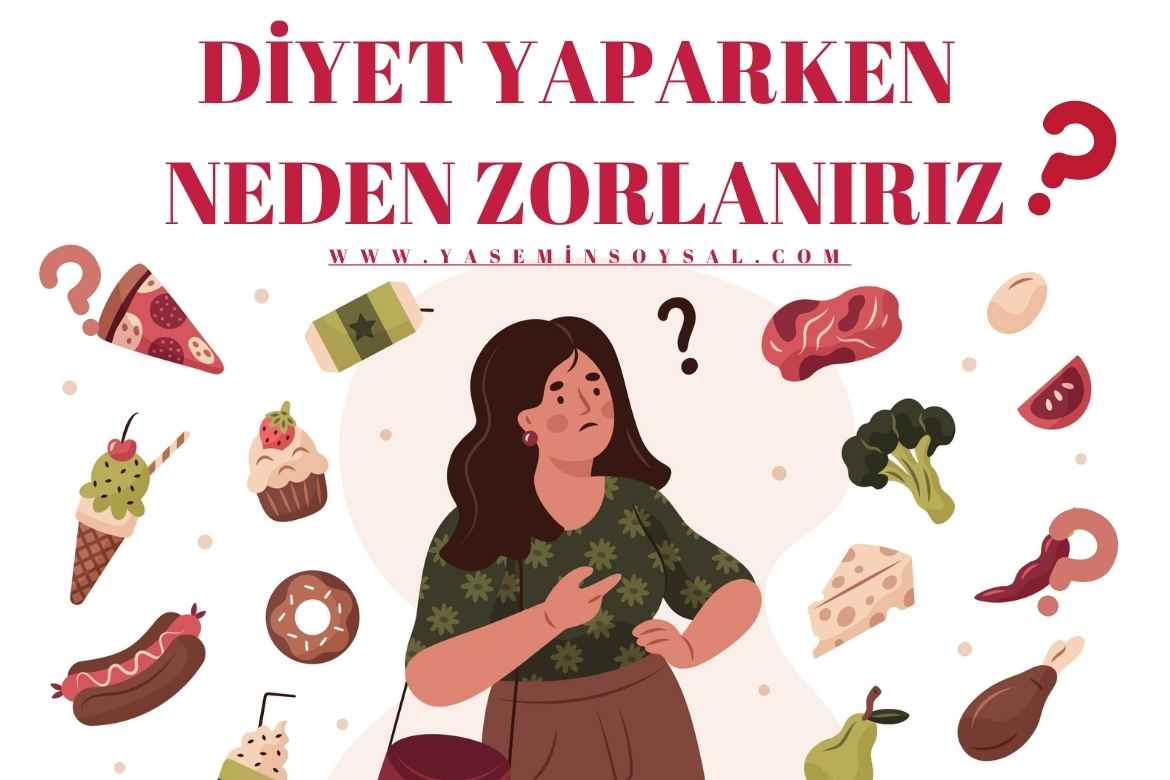
Why do we struggle when dieting? There are many reasons: psychological, physiological, diet psychology, biological and mental factors are just some of them.
Why do we struggle when dieting? Let’s answer with psychological and scientific explanations
Losing weight is everyone’s dream, but the process can often be harder than expected. Don’t worry, many people have the same problems as you, and there are actually many scientific and psychological explanations for this. In this post, I’ll explain why dieting is difficult and how you can overcome it.
Many people who set out on a weight-loss journey find it hard to stick to their diet after a while. Often the reason is thought to be only a lack of willpower or discipline. But the situation is usually more complex. Many psychological and biological factors make dieting hard.
Why do we struggle when dieting? The psychology of restriction
One of the biggest psychological factors that makes dieting hard is the perception of “restriction”. For example, you’ve restricted a food you love in your diet. This can trigger a psychological rebound effect: restriction pushes you to think about that food more and want it more. We can compare it to a child who becomes more interested in a toy they’ve been forbidden to play with. Now you might ask me: if we don’t restrict ourselves, we may constantly want that forbidden food, and that will make us gain weight.
Look, the answer is hidden in the question itself. Constantly wanting! What makes you gain weight isn’t wanting or eating that food; it’s constantly wanting it. If you forbid something you constantly want, you’ll have to keep forbidding it to yourself all the time. That’s very frustrating. Being in a constant state of prohibition isn’t something you can bear. So instead of constantly banning the food, you need to find out why your brain keeps getting stuck on it. Otherwise, because of a food you’re using to fill an emotional gap, you’ll find yourself in an even bigger emotional gap.
Biological Factors and Dieting Difficulties
Biologically, the body tries to maintain its energy balance, which can make weight loss harder. When you reduce your calorie intake on a diet, the body adapts by burning less energy and lowering your metabolic rate. This slows your weight loss and can make you feel hungry more quickly. Many scientific studies support this “metabolic adaptation”. For example, a 2016 study of former contestants of the TV show “The Biggest Loser”, co-authored by Dr Kevin Hall, found that their metabolic rate was still lower six years after the competition.

Hedonic Hunger: The Hidden Danger That Makes Dieting Harder
Another difficulty when dieting is what’s called “hedonic hunger”. Unlike physical hunger, this kind of hunger is driven by the brain’s reward system. Even when you feel completely full, you can have a strong desire for certain foods. For example, at a birthday party, even after you feel full, you may feel hungry again when you see a slice of cake. Work by Dr Kent Berridge and Dr Terry Robinson in 1998 suggested that “wanting” and “liking” food are handled by different brain systems, which helps explain this kind of hunger.
Why do we struggle when dieting? Understanding and managing these and similar difficulties can increase your success in losing weight. Reducing the feeling of restriction, aiming for adequate and balanced nutrition, understanding the difference between physical and hedonic hunger, and responding consciously to this kind of hunger are some of the keys to overcoming dieting difficulties. Of course, the most important thing is changing the way of thinking that makes you gain weight.
In short, the difficulties you face when dieting are usually based on biological and psychological factors. But once they’re understood and approached with the right strategies, they become surmountable. So remember to be patient and keep learning throughout this process.